Design Challenge
Research and develop a safe, engaging and innovative toy product for children.
Problem Space
Children’s toys play a vital role in a child’s cognitive development. Toy-makers and parents alike are tasked with providing the new generation with toys that boast a mix of entertainment, educational value, lifestyle compatibility and affordability.
Research
Parental Prefernces
We asked parents how much they value each of these characteristics in a toy when shopping for their children.
| Parent | Kids | Active | Engaged | SMart | violent | Pricey | safe |
|---|---|---|---|---|---|---|---|
| Micheal | 2 |  | | |  | | |
| Sofia | 2 | | |  | | | |
| Sharmistha | 1 | | | | | | |
| Debasri | 1 | | | | | | |
| Brad | 1 | | | | | | |
| Chris | 2 | | | | | | |
| Stephy | 2 | | | | | | |
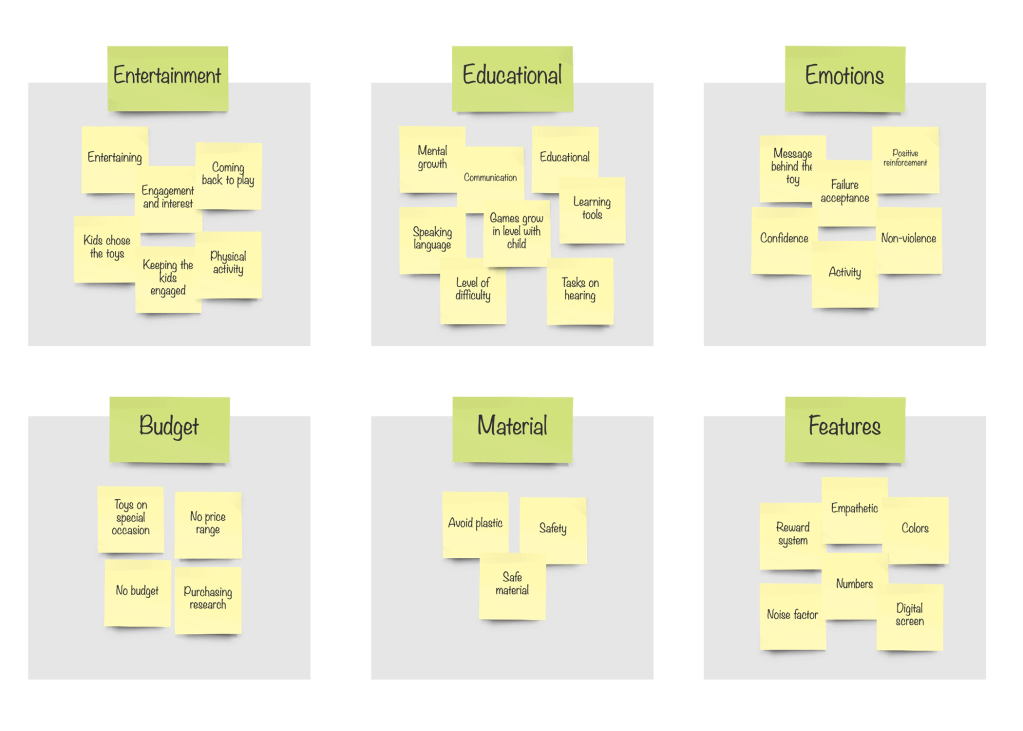
Affinity Diagram
Buy-A-Feature
| Parent | Fun | Safe | Active | Cost | Learn |
|---|---|---|---|---|---|
| Brad | $20 | $20 | $20 | $10 | $25 |
| Kelly | $25 | $20 | $20 | $10 | $25 |
| Natalia | $10 | $50 | $10 | $5 | $25 |
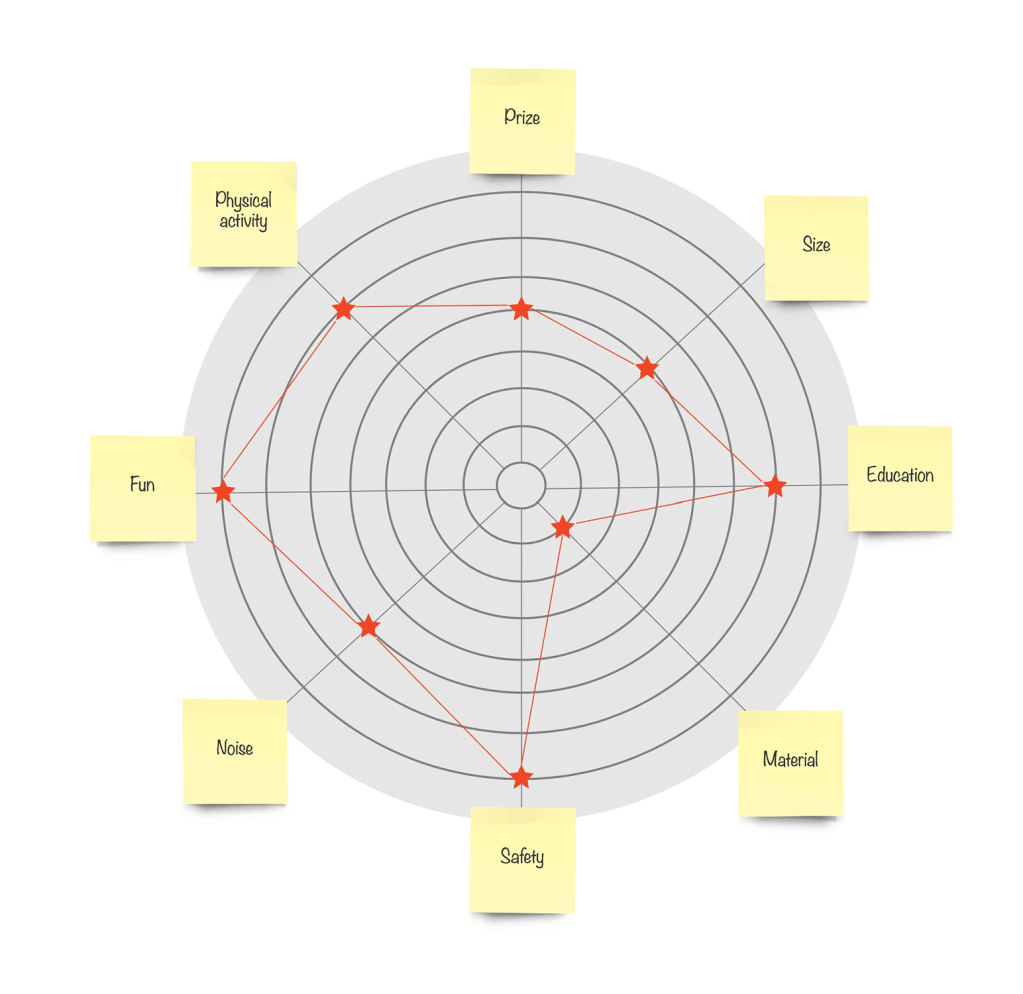
Radar Diagram
Fly-on-The-Wall observation
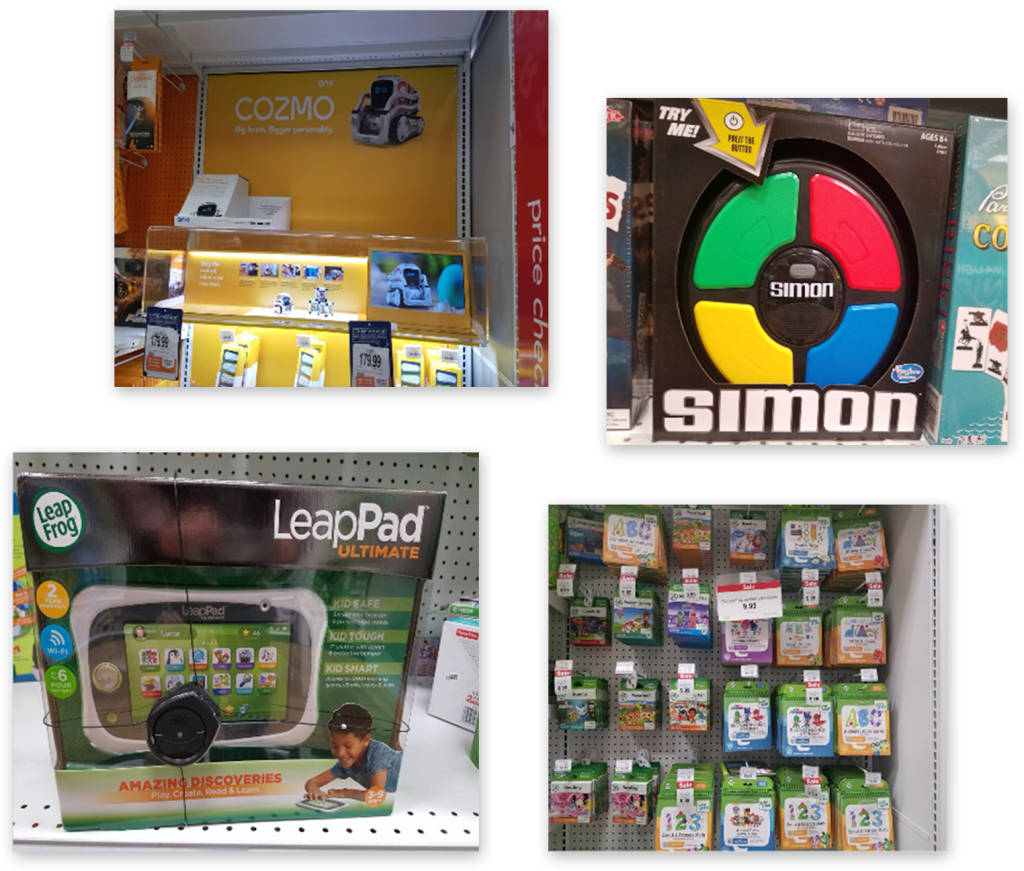
We observed the types of toys available in local stores to compare what already existed and the characteristics emphasized by our would-be competitors in the market.
Design SOlution
Personas

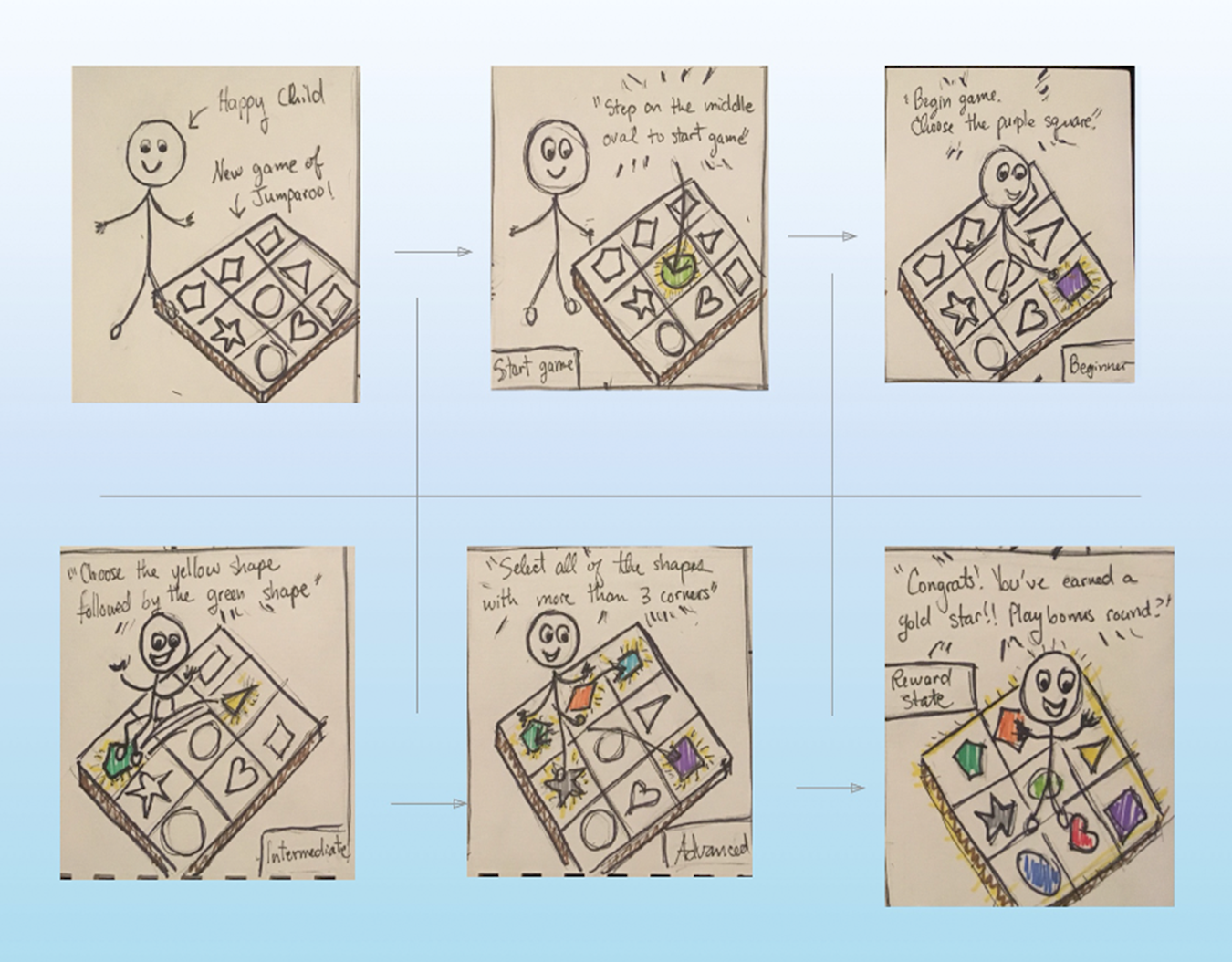
Storyboarding
Using the insights from our research, we ideated a product that would embody the characteristics that were most essential for a good experience, both from the vantage point of the child and the parent.
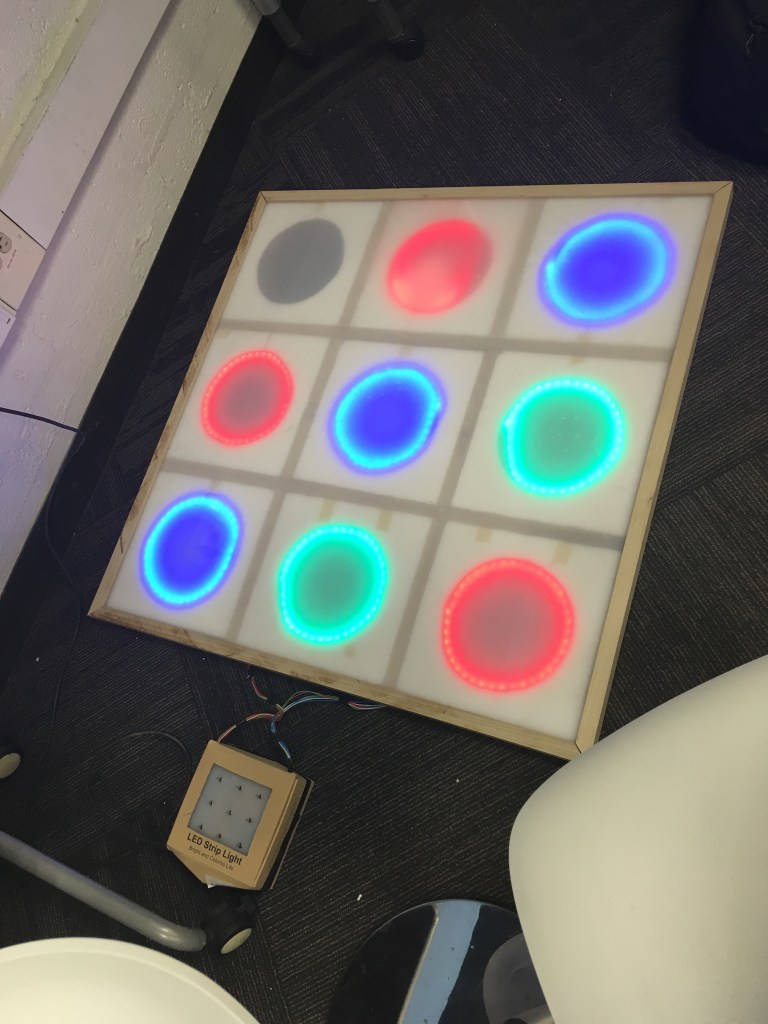
Product description: An interactive board placed on the ground with pressure sensors that signal interaction with the use of light and sound. An engaging tool that will not only boost the child’s physical activeness but improve their mood.
Key features:
- Educational
- Fun
- Interactive
- Sensored lights
- Shapes
- Colors
- Empathetic
- Different levels
- Engaging
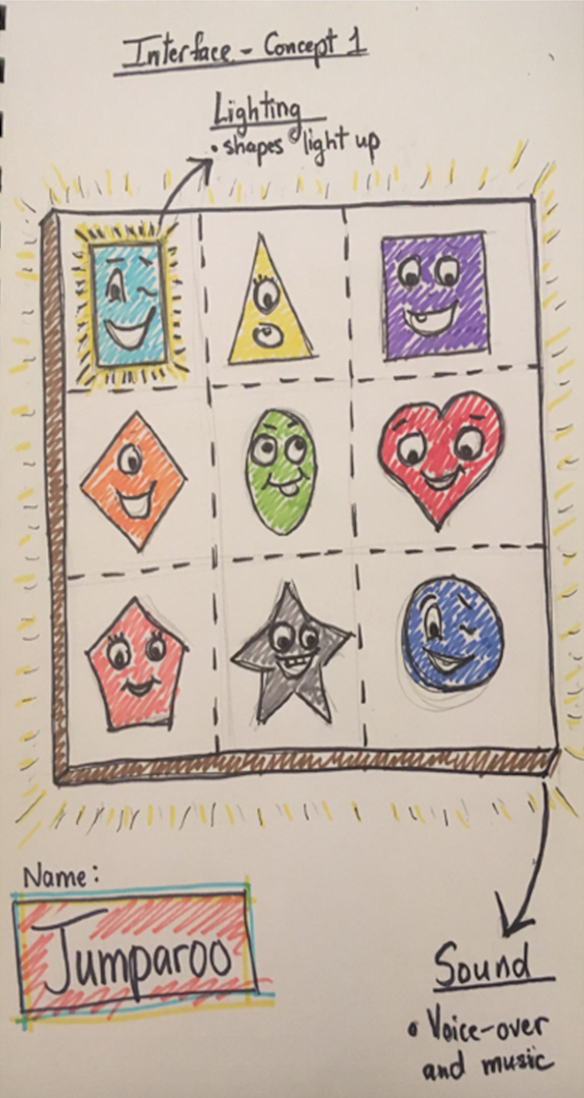
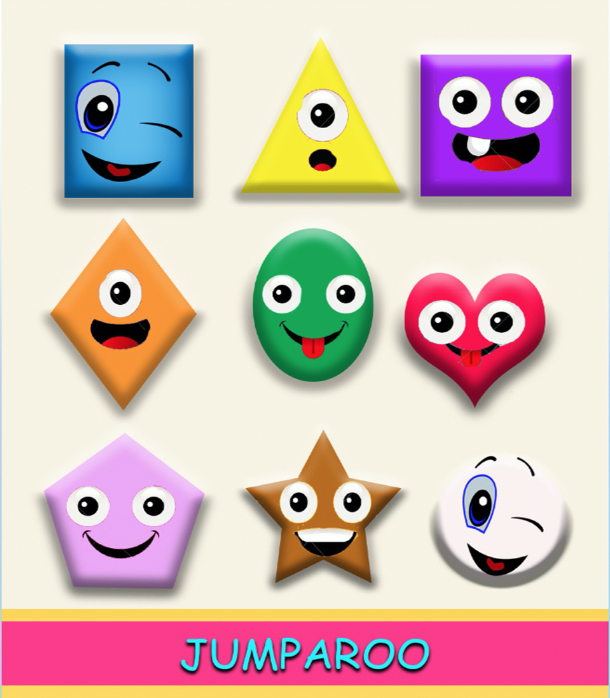
First Iteration
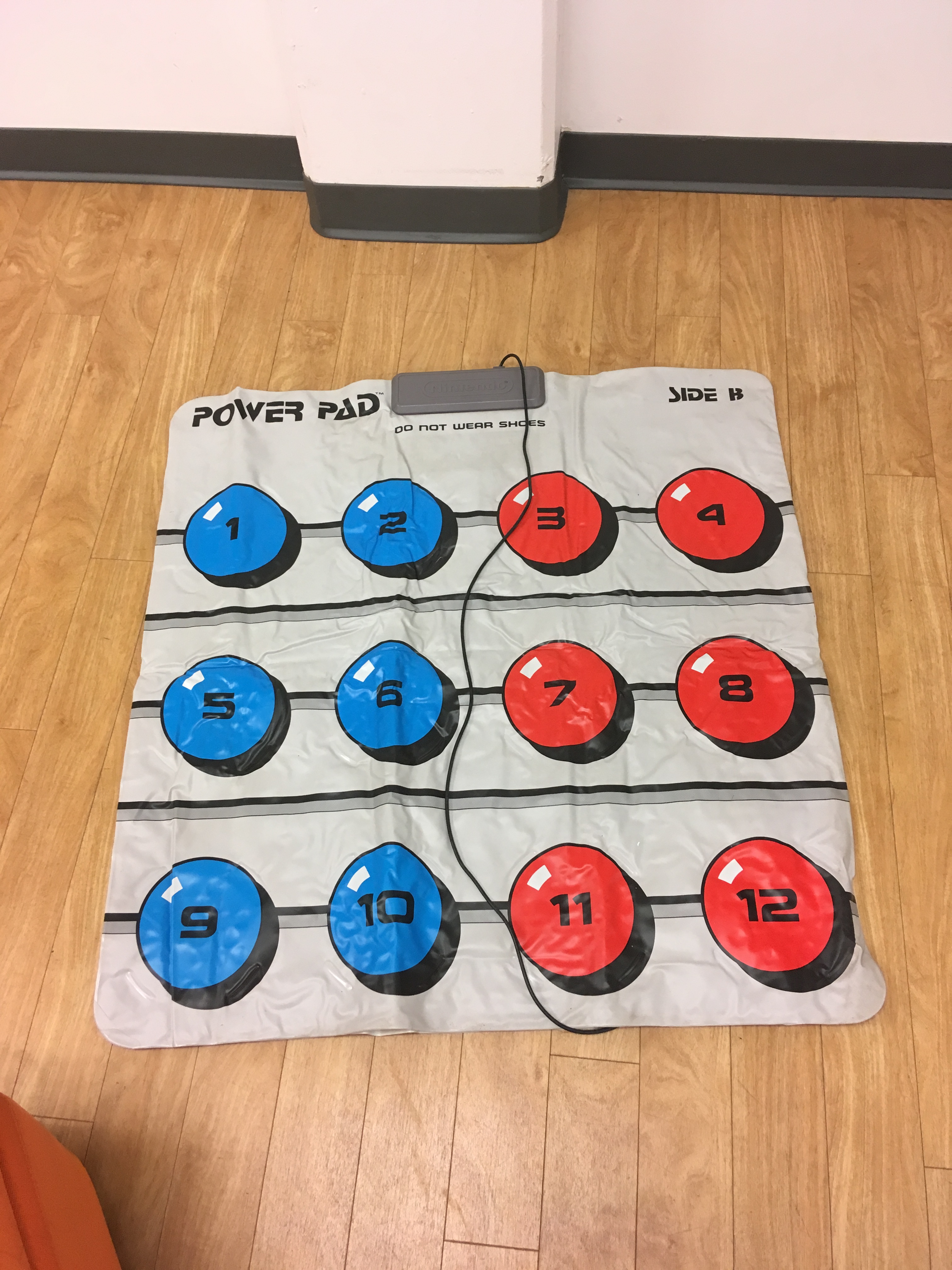
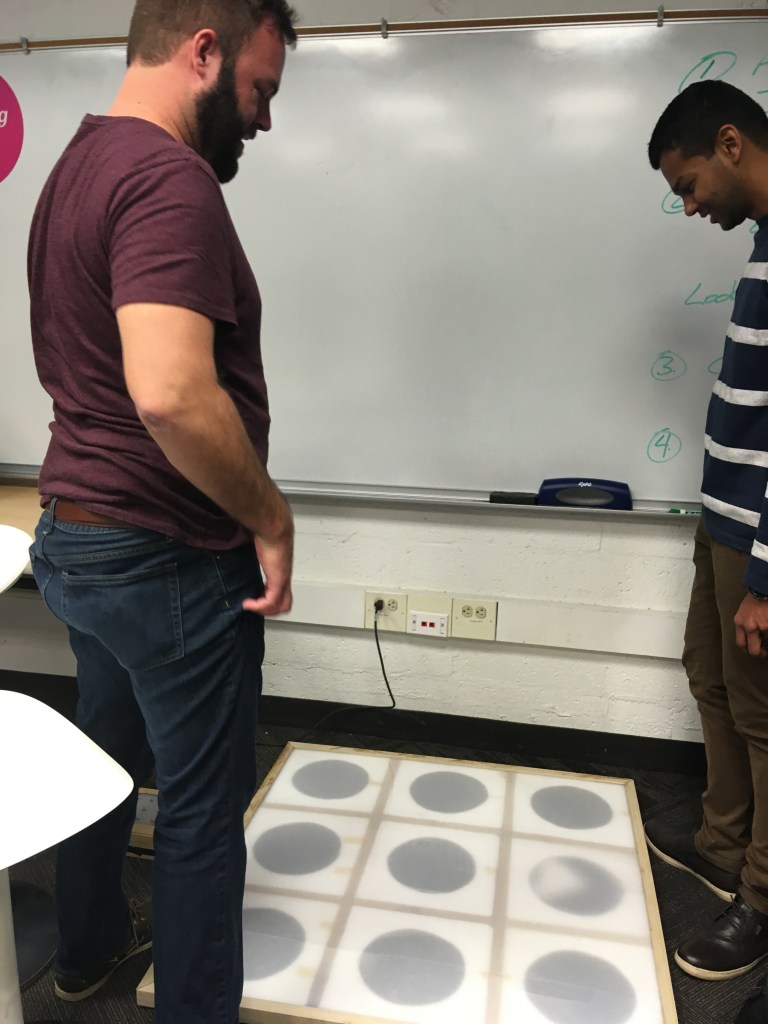
We started with a digital mockup, then moved into development of the physical prototype by studying existing products with similar functionalities.
Bull’s Eye Diagram
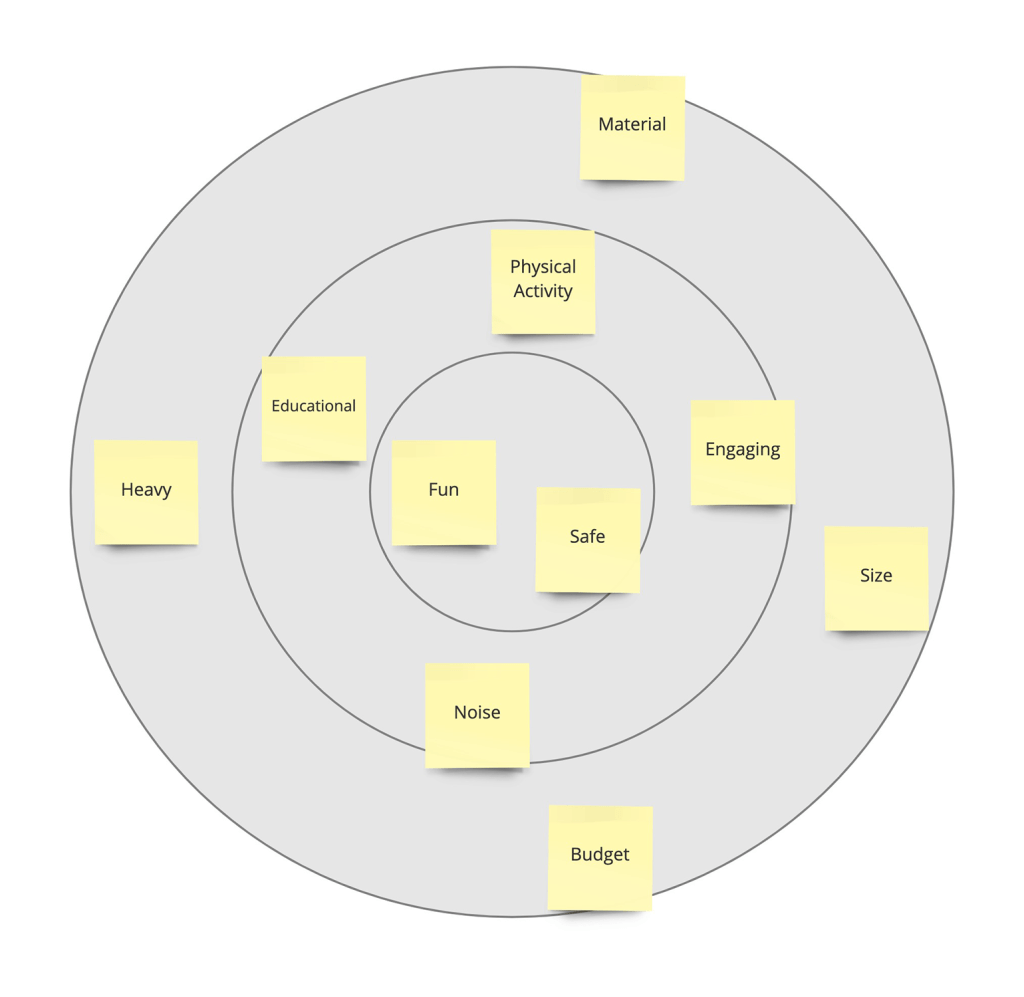
Statement Starters
| How do we make the child physically active? | Does the toy need to be waterproof? | In what ways scan we incorporated learning & fun? |
| Do kids gravitate to bright lights? | Is the toy used with shoes on or just socks? | Does the toy need to look aesthetically appealing to parents? |
| Does sound attract kids more? | How can we improve storage or portability? | How can we get kids away from screens? |
| How can we broaden our demographic? | How much time should be spent with a toy like this? | How can we foster meaningful engagement? |
| What different games can we incorporate in the UI? | Risk of the child using the toy excessively? | Can the toy be used inside, outside, or both? |
| Does a toy need to make sound/noise to be competitive in the market? | What’s the toy’s reward system? | How does a child select which game to play? |
| Should this be marketed as a gender-specific toy, and is that significant? | Do kids enjoy educational toys? | Should the toy have any parental controls? |
| What should the price point of the toy be? | How is the toy activated? | Does the toy respond to voice commands? |
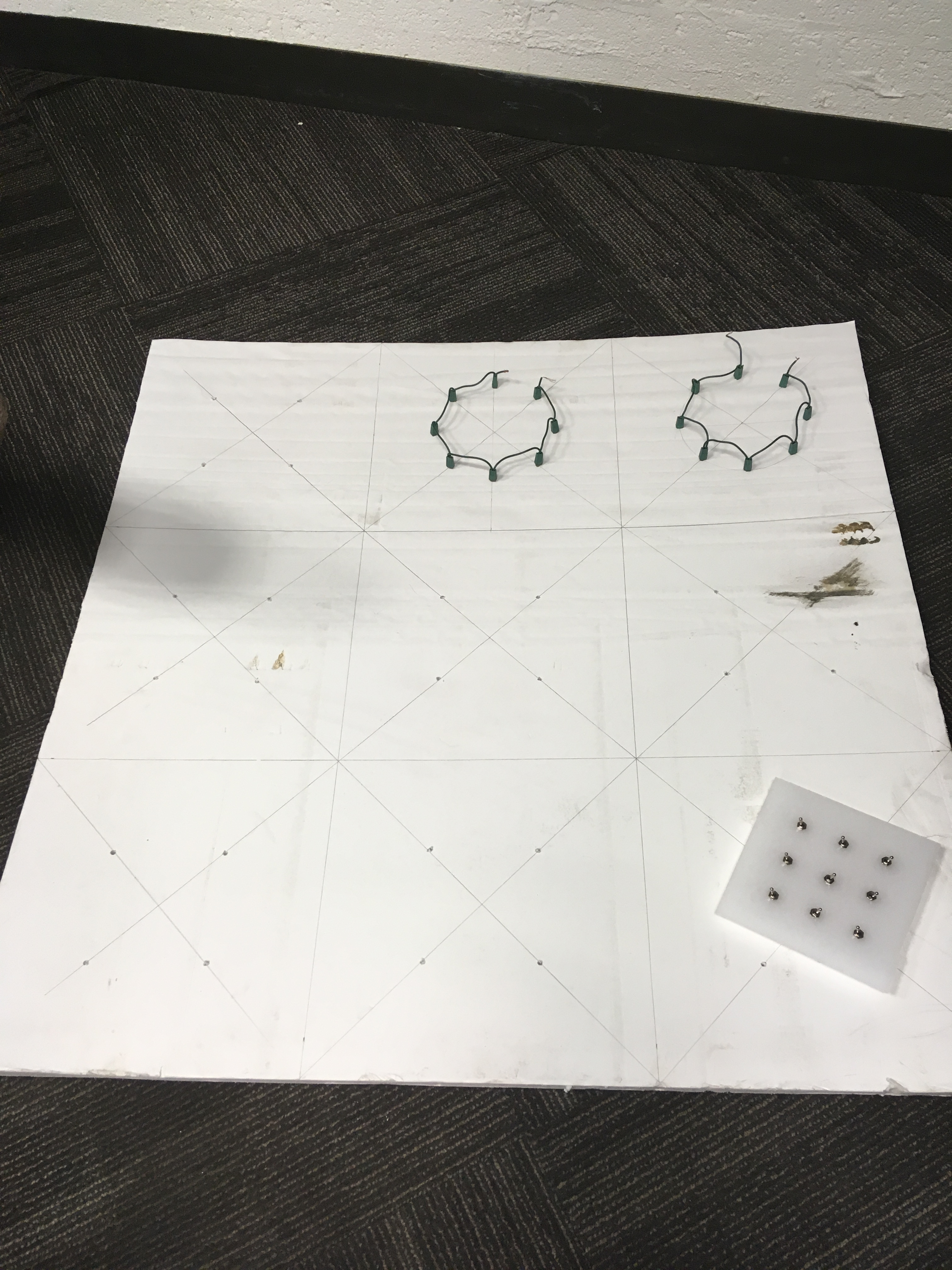
Second iteration
Testing
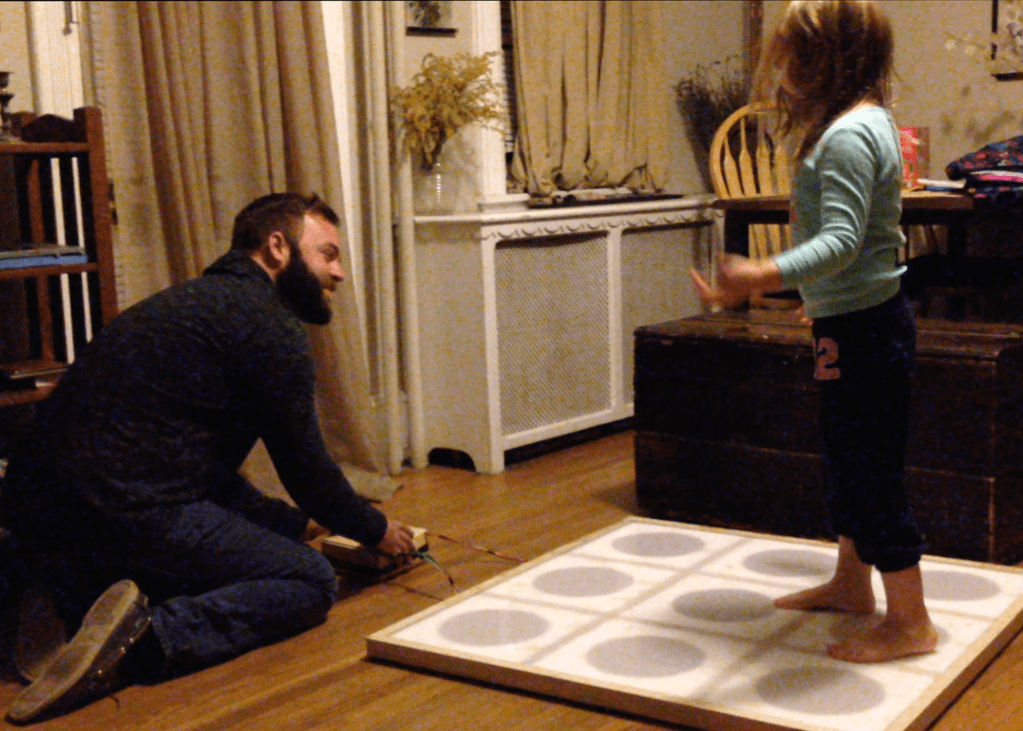
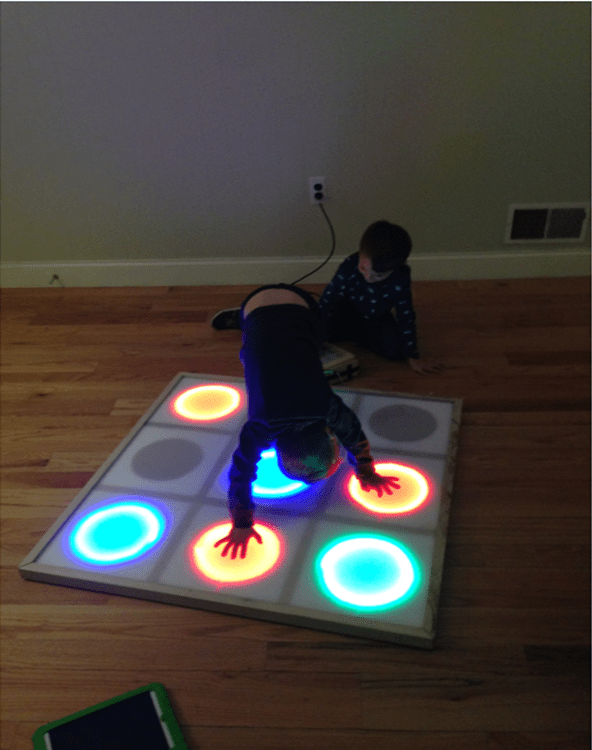
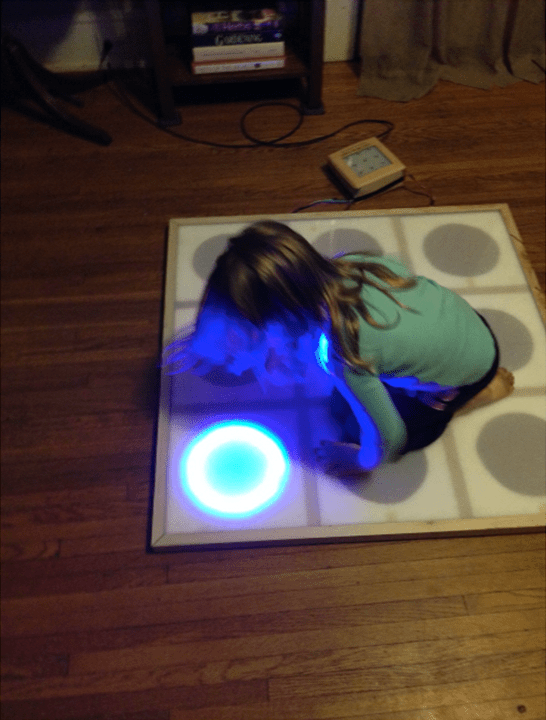
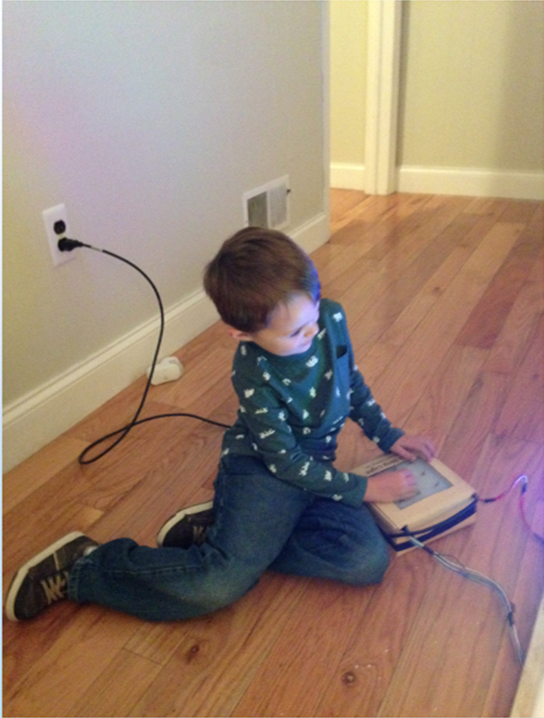
“I like the jumping!”
“I like the colors”
“I want to play with the switches!”
Rose, Thorn, Bud

| Physical activity |
| Combating child obesity |
| Improved motor skills |
| Outlet for extra energy |
| Group coordination |
| Time away from screens |
| Buys time for parents |
| Entertaining to kids |

| Potential injuries |
| Slippery material |
| Sharp edges |
| Can be too exhausting |
| Product is heavy |
| Portability issue |
| Over-excitement |
| Cords are trip hazard |

| Adding more players |
| Game variation potential |
| Touch/pressure sensors |
| Twister: using hands & feet |
| Doubles as whiteboard |
| Educational components |
| Level increases with child |
| Playing with switches |
 Irina Dokova
You must be logged in to post a comment.